Treating Alcohol Use Disorder with AI-Guided Brain Stimulation
NeuroPrism combines non-invasive temporal interference neuromodulation with an AI mental health platform to reduce craving, restore sleep, and prevent relapse.
The Problem
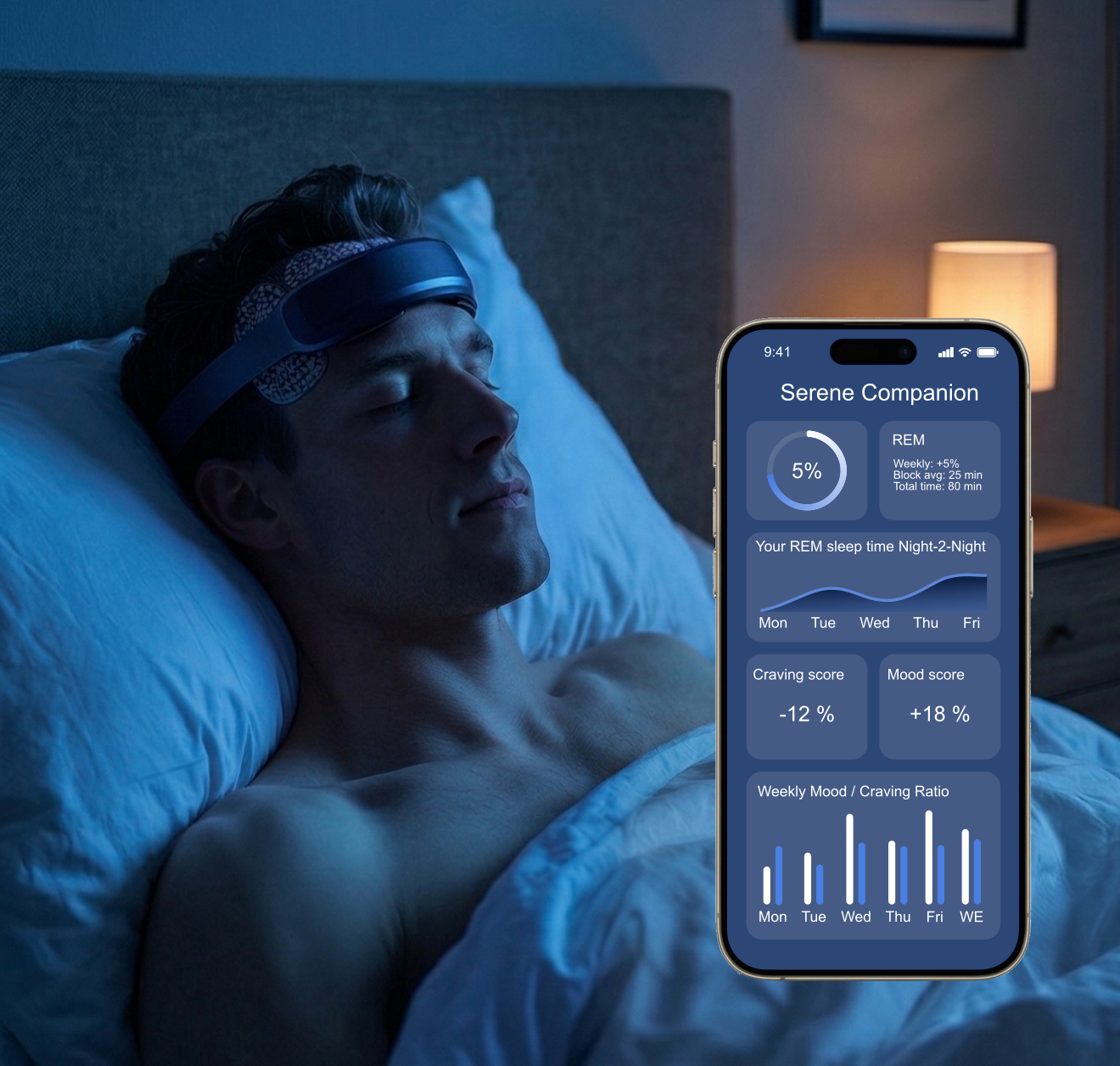
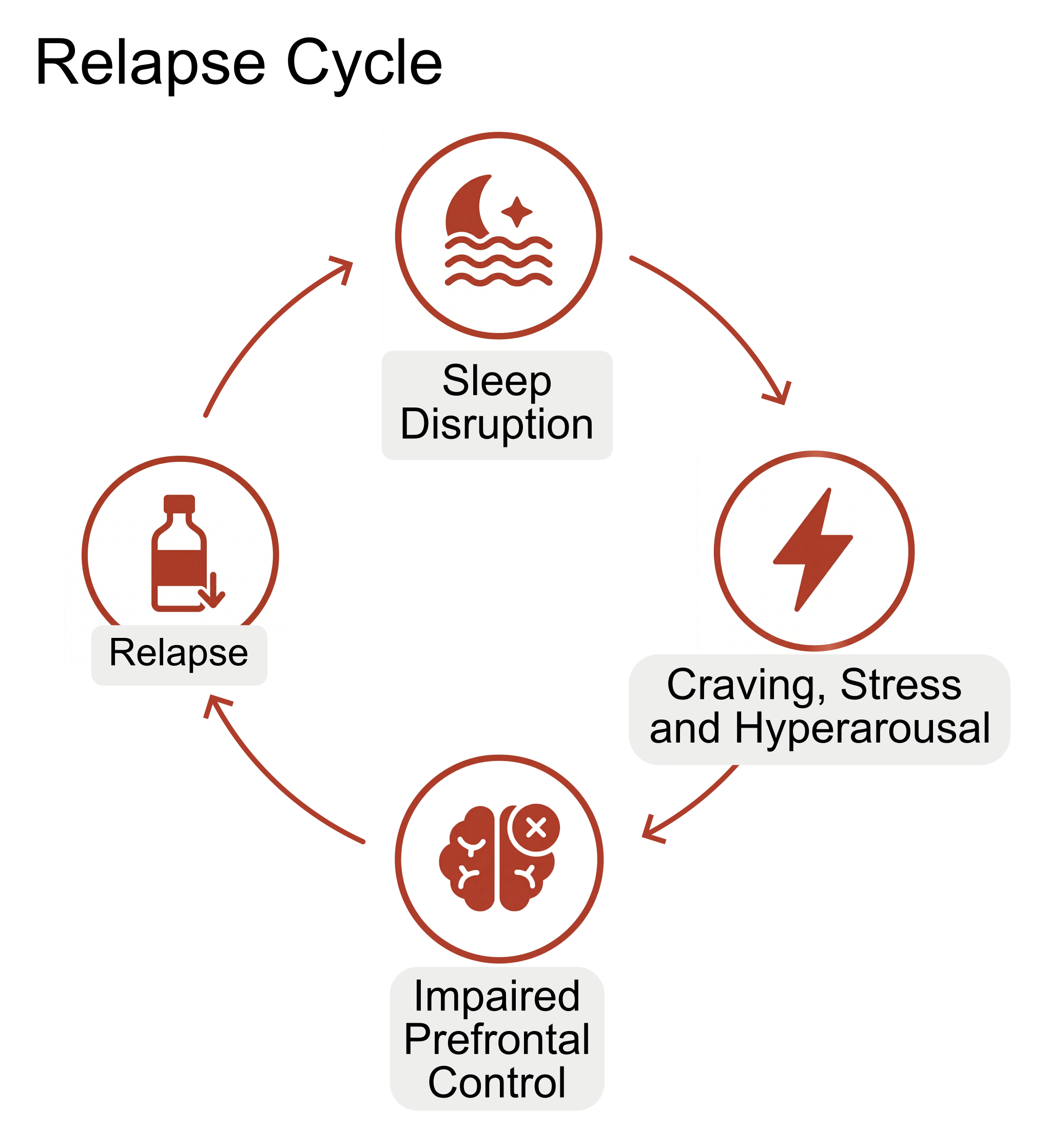
Alcohol Use Disorder affects over 48 million Europeans, with relapse rates exceeding 60% even with the best available treatments. Sleep disturbances persist into abstinence and are among the strongest predictors of relapse, yet current therapies address sleep and addiction separately — overlooking the shared neural circuits that drive both.
Medications like naltrexone reduce craving but cause side effects — including sleep and mood disruption — that undermine adherence. Existing brain stimulation methods (TMS, tDCS) cannot reach the deep brain structures most relevant to relapse.
Our Two Technologies
Continuous AI-Powered Assessment
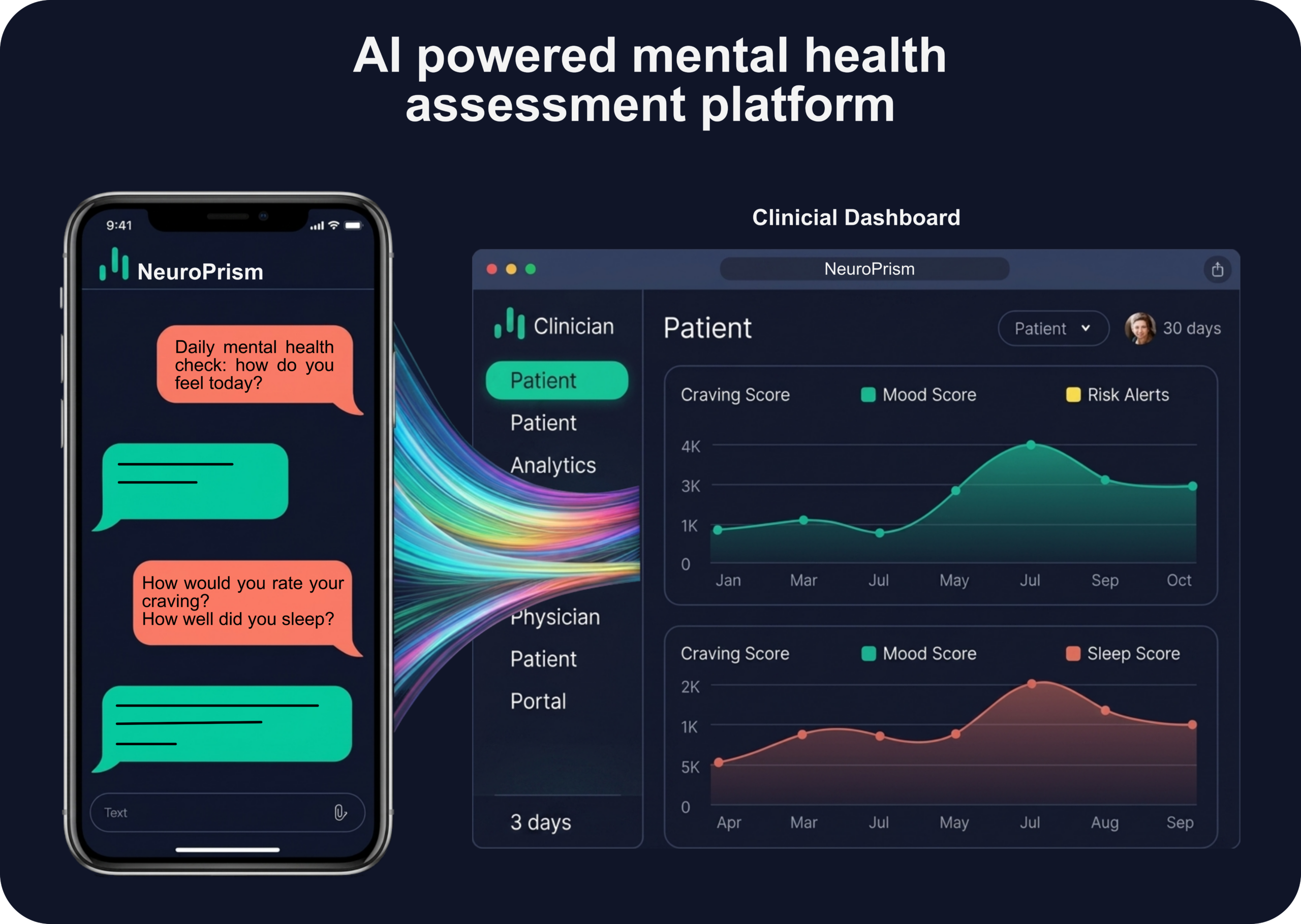
Our AI mental health platform tracks craving, mood, and sleep quality through daily conversational check-ins. Using an ensemble of NLP algorithms, it classifies mental health states from text with 93% precision. Physicians monitor patients in real time through a secure clinical portal — with automated risk alerts and longitudinal trend tracking.
Non-Invasive Deep Brain Stimulation
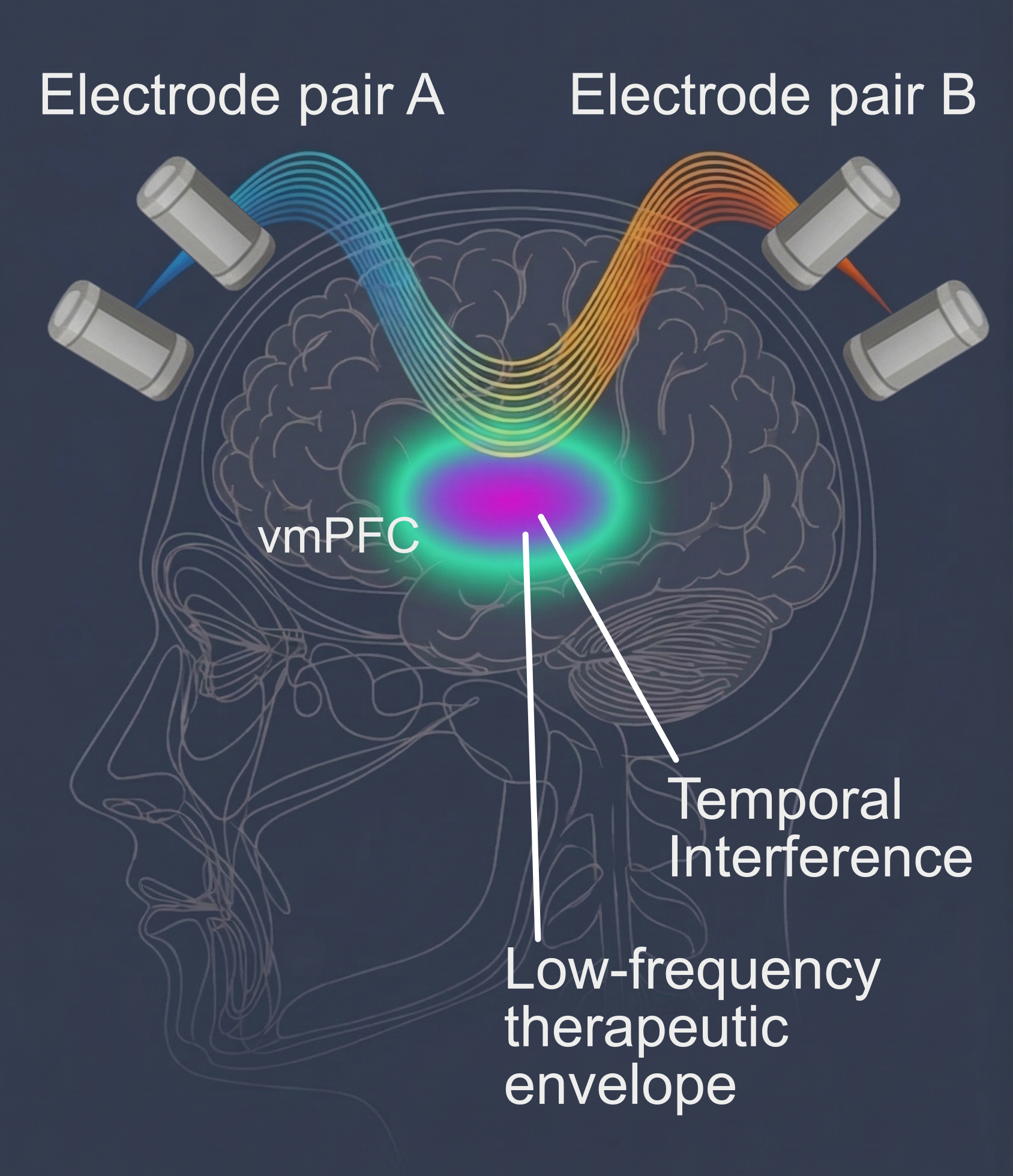
Temporal interference targets the vmPFC — a deep brain structure controlling sleep, craving, and emotional regulation — without surgery. Stimulation parameters are personalized using digital twin brain models. The device is portable and home-compatible.
Read more in Science Magazine: Colliding currents can target deep brain without surgery
How It Works
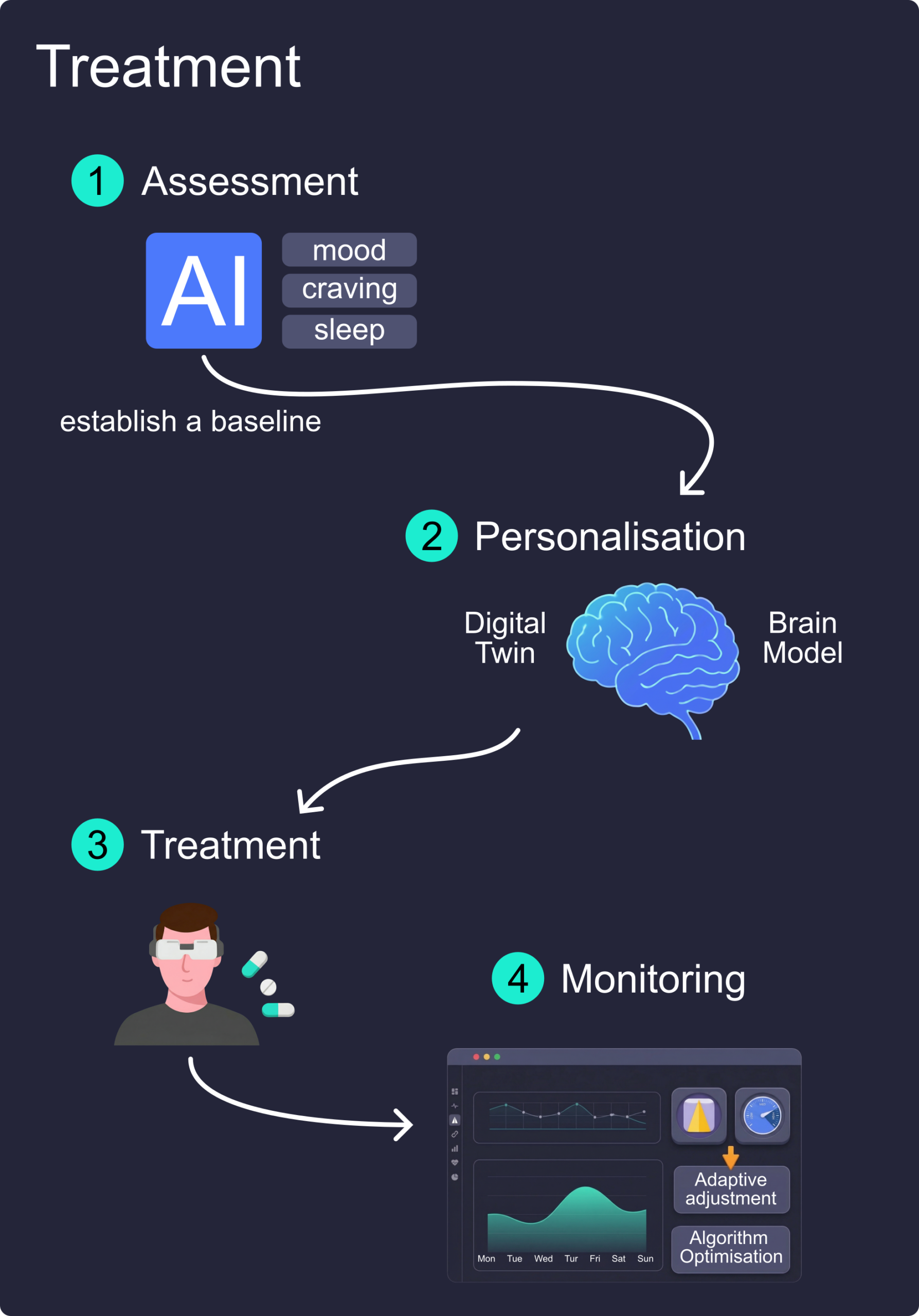
1. Assessment
AI app establishes baseline craving, mood, and sleep patterns through daily conversational check-ins.
2. Personalization
Digital twin brain model optimizes stimulation electrode placement and parameters for each patient.
3. Treatment
Nightly or daily TI sessions target the vmPFC alongside standard anti-craving medication. Portable and home-compatible.
4. Monitoring
Continuous AI tracking of outcomes with physician portal alerts enables adaptive adjustment of therapy.
Partner with us to transform AUD treatment
For clinicians, researchers, and healthcare systems interested in deploying AI-guided neuromodulation.